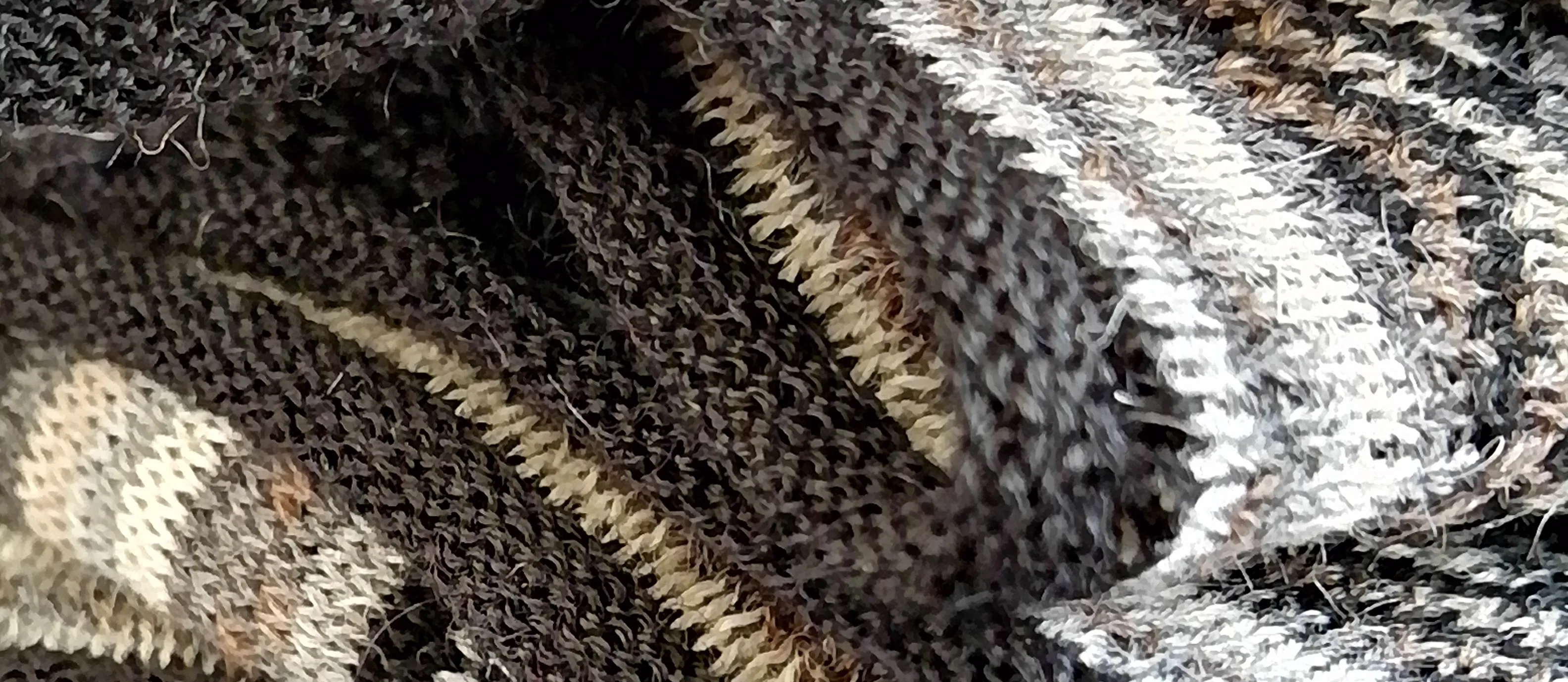
It biodegrades like hair. Not like plastic.
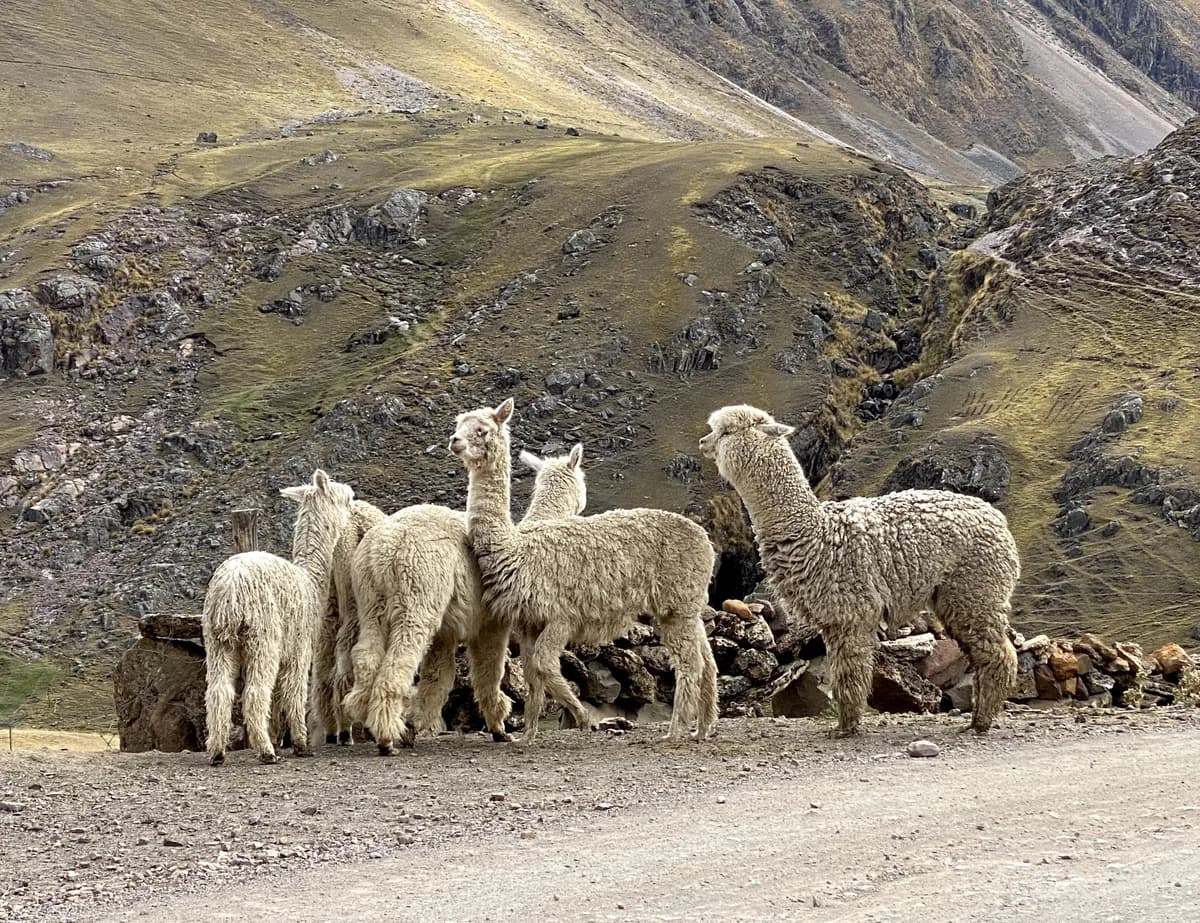
The animal
It learned to live where almost nothing grows.
Six thousand years ago
It was domesticated in these same Andes, more than a thousand years before Egypt raised its first pyramid. It didn't arrive from anywhere. It came from here.
Under the Inca
Cloth was worth more than gold. The finest was woven in Cusco, and only the Inca's family wore it. When the Spanish arrived, what they were offered in welcome was not metal. It was cloth.
After the conquest
The herds nearly vanished. The alpacas survived up in the puna, where the communities kept raising them while everything below changed.
Today
Nearly nine of every ten alpacas in the world are in Peru. Cusco, where we weave, raises close to 15% of the national herd.
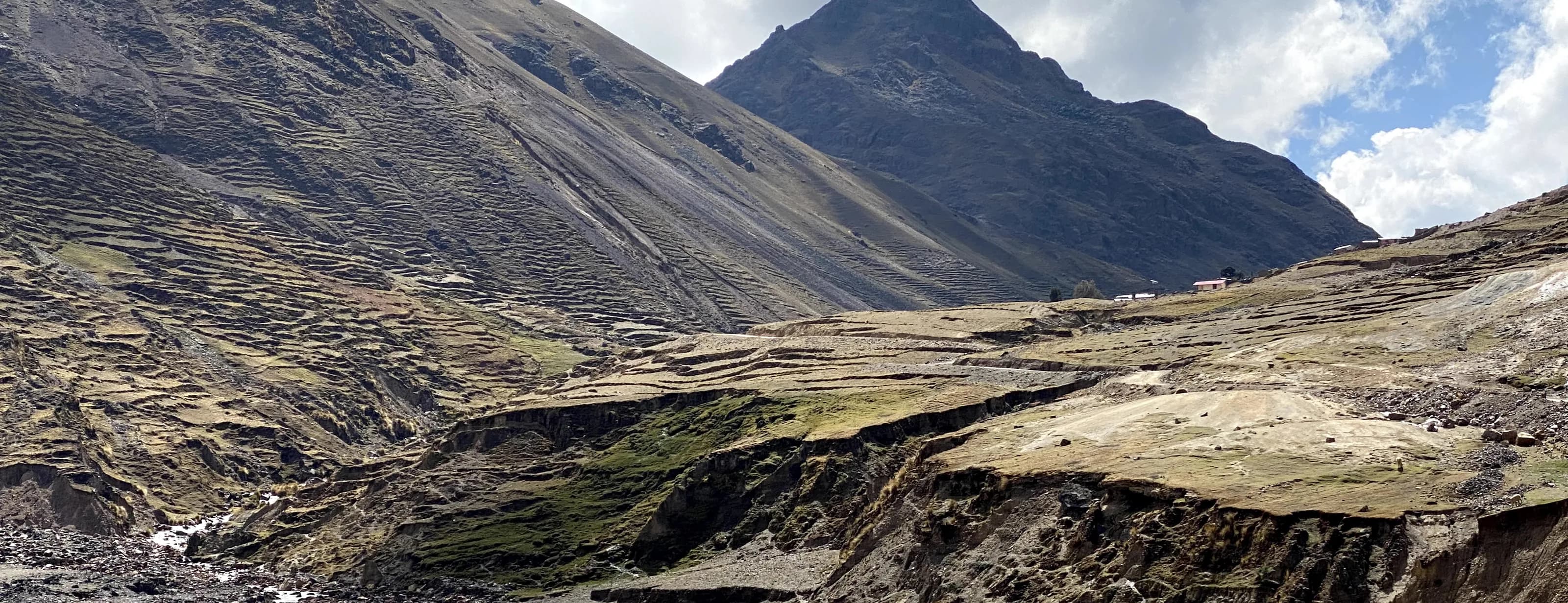
Not every alpaca gives the same fibre.
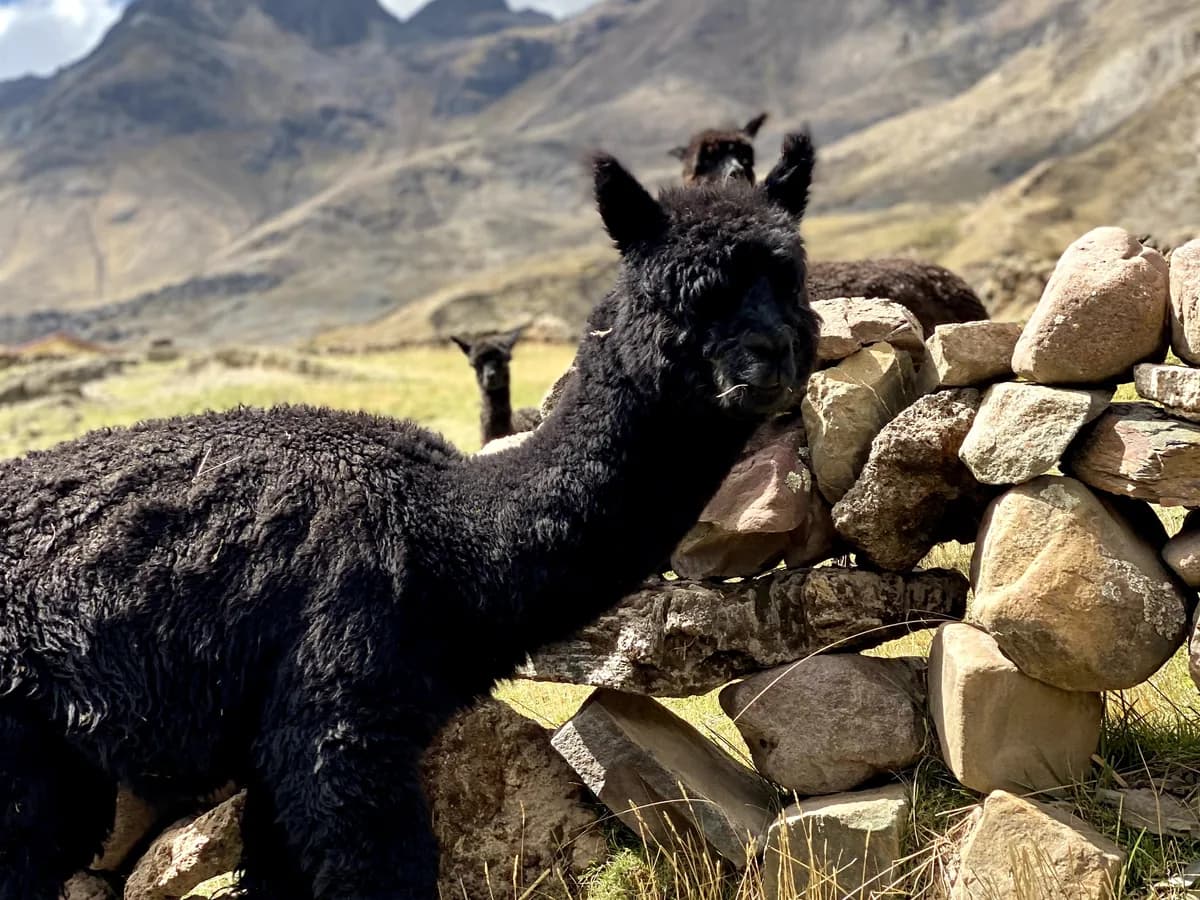
Huacaya
The fibre grows crimped and even, in layers close to the body. It's the alpaca most people picture.
Photograph by Awasqa Boni, 2021.
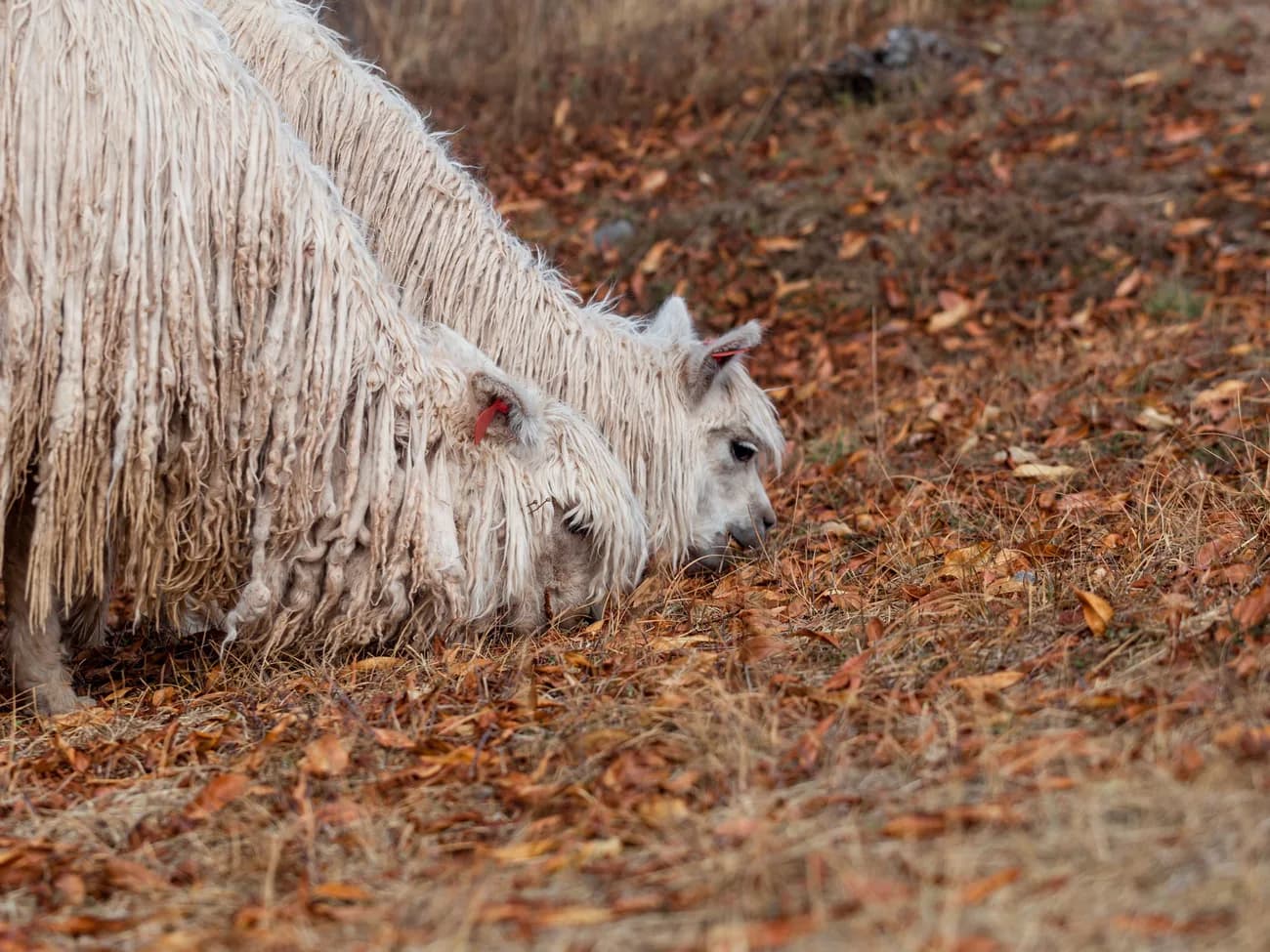
Suri
The fibre falls in long, lustrous locks, like cords. It is far rarer, and its yarn carries more sheen.
Stock photograph: Paloma Briceno / Pexels.
None of this was designed in an office. It was selected over centuries by people who needed to get through winter at four thousand metres. Every garment that leaves the workshop inherits that work.
The material
What you notice wearing it.
Warm without the weight
It insulates without loading the garment. It holds the heat when it's cold and breathes when the day turns, which is what you want from a coat you'll wear all winter.
It doesn't itch
Sheep's wool itches because of lanolin, the natural grease it carries. Alpaca has almost none, and its strand is smoother. That's why it can be worn against the skin, at the neck and the wrists, without bothering you.
Baby alpaca is not a baby alpaca
100% alpaca and baby alpaca are not the same thing. Baby alpaca is the finest grade of the fiber, not the age of the animal: a grown one produces it just the same. It feels softer, so it goes where the garment meets the skin. We state which one every piece is made with.
The color is already in the fiber
Alpacas don't come in a single color. From white to black, through the beiges and the browns. When a piece is in a natural tone, that color belongs to the fiber, not to a dye.
| 100% Alpaca | Acrylic | |
|---|---|---|
| Origin | Natural, animal fiber | Petroleum byproduct |
| Biodegradability | Returns to the earth, like human hair | Doesn't biodegrade, persists like plastic |
| With moisture | Absorbs perspiration and releases it | Barely absorbs it; it stays on the skin |
| Over the years | Softens and holds its shape | Pills and loses its body |